How to Identify aWorm-eating Warbler
Helmitheros vermivorum · 4.7–5.5 in (12–14 cm)
Male vs. female
Male
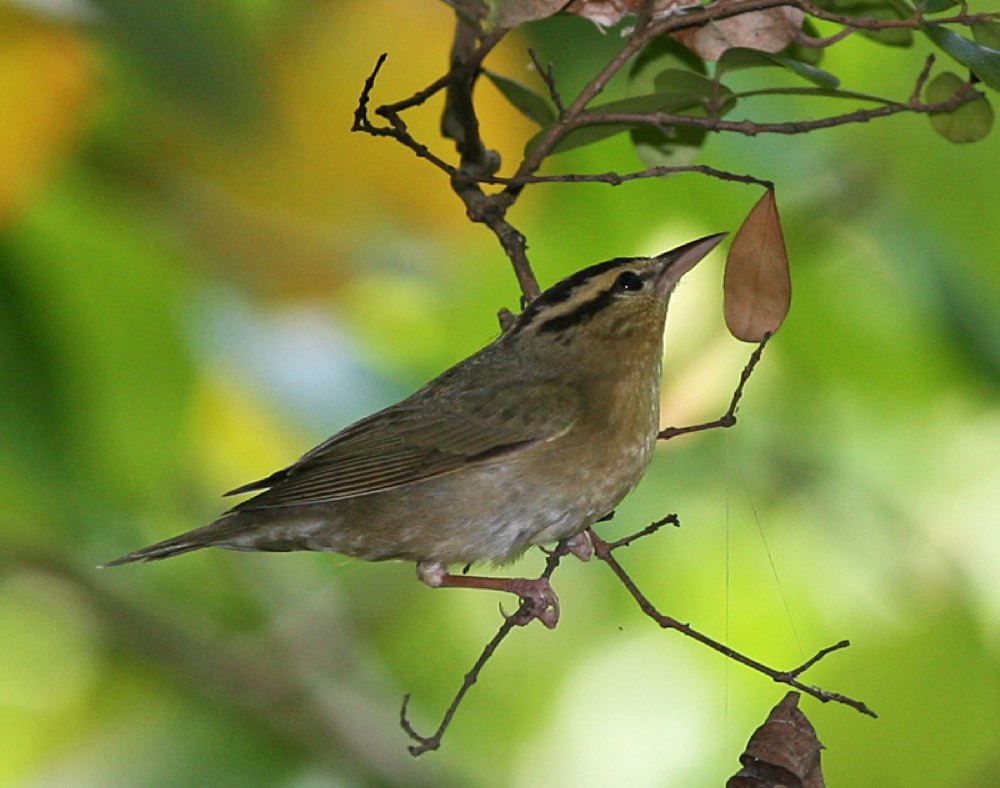
Warm olive-brown above and buffy below, with four bold black stripes running along a rich buff head. Sexes look alike.
Female
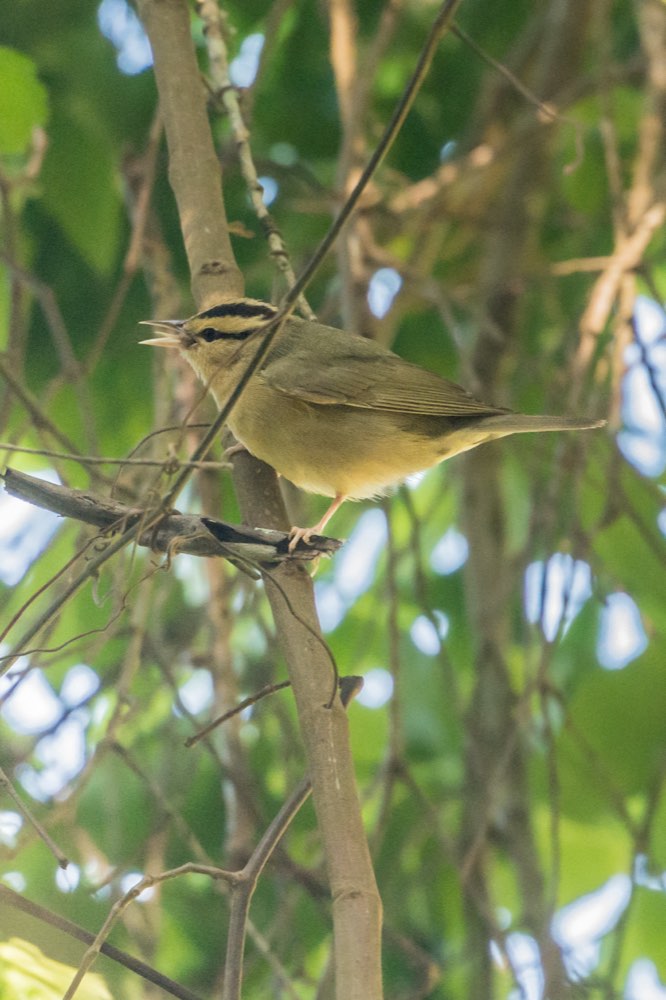
Identical to the male in the field.
Male photo: http://www.birdphotos.com / Wikimedia, CC BY 3.0 · Second photo: Andrew Cannizzaro / Wikimedia, CC BY 2.0
Field marks
- Black head stripes over buff, with no other bold markings
- No wingbars and no streaking below
- Fairly long pointed bill
- Forages by probing hanging dead leaves
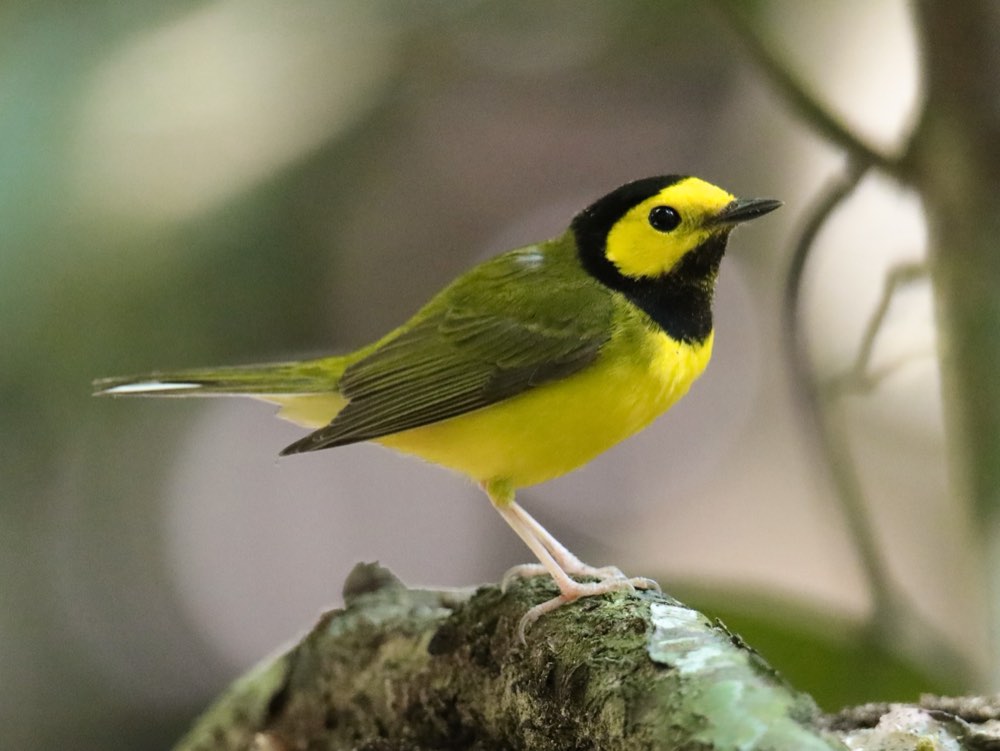
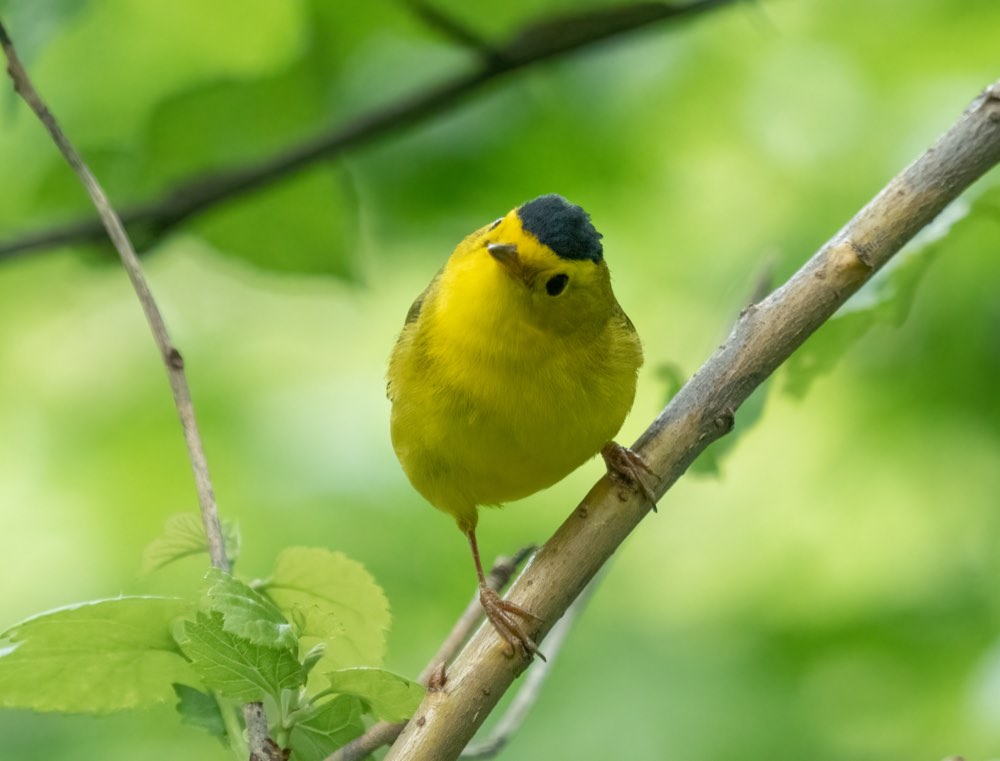
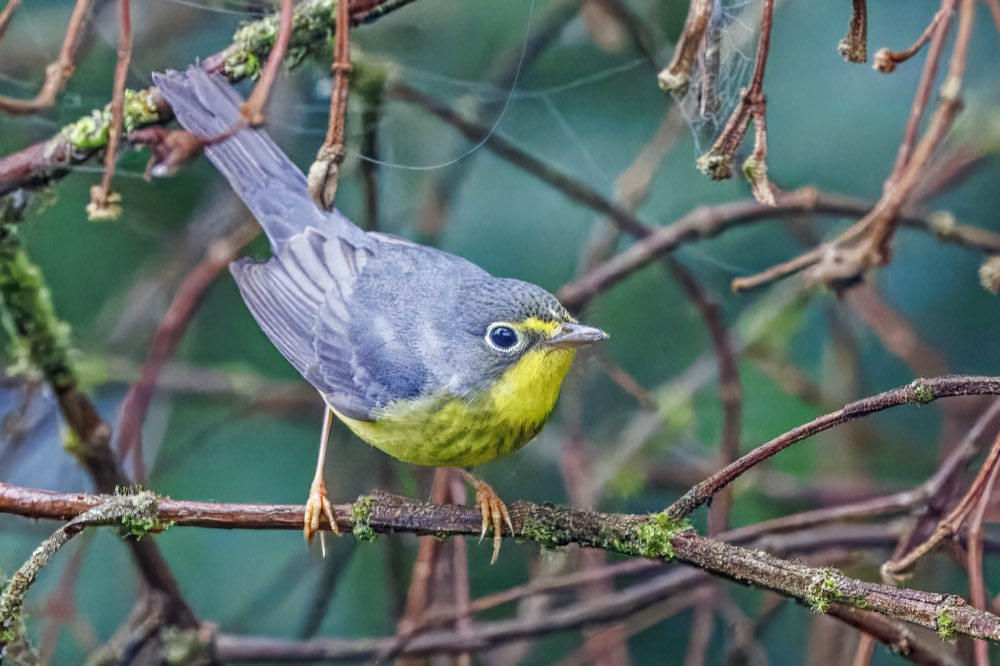
Similar species
What it sounds like
A dry, flat, insect-like trill on one pitch, easily mistaken for a Chipping Sparrow.
Behaviour that gives it away
Specialises in probing clusters of dead hanging leaves, a niche almost no other warbler exploits.
Habitat & range
Steep, wooded hillsides with dense understorey in the eastern deciduous forest.
When you'll see it
A summer visitor that arrives to breed in eastern and southeastern North America.
What it eats
Caterpillars and spiders, mostly from hanging dead leaves — not earthworms.
Did you know?
It does not eat earthworms; the name comes from its taste for caterpillars, which early naturalists called worms.
Spot one yourself?
Point your camera at any bird and Aviarist identifies it in seconds — then logs it to your life list.
Get Aviarist on Google Play
More backyard birds

_(32719474777).jpg)
Other apps we make