How to Identify aRuddy Turnstone
Arenaria interpres · 8.7–9.4 in (22–24 cm)
Male vs. female
Male
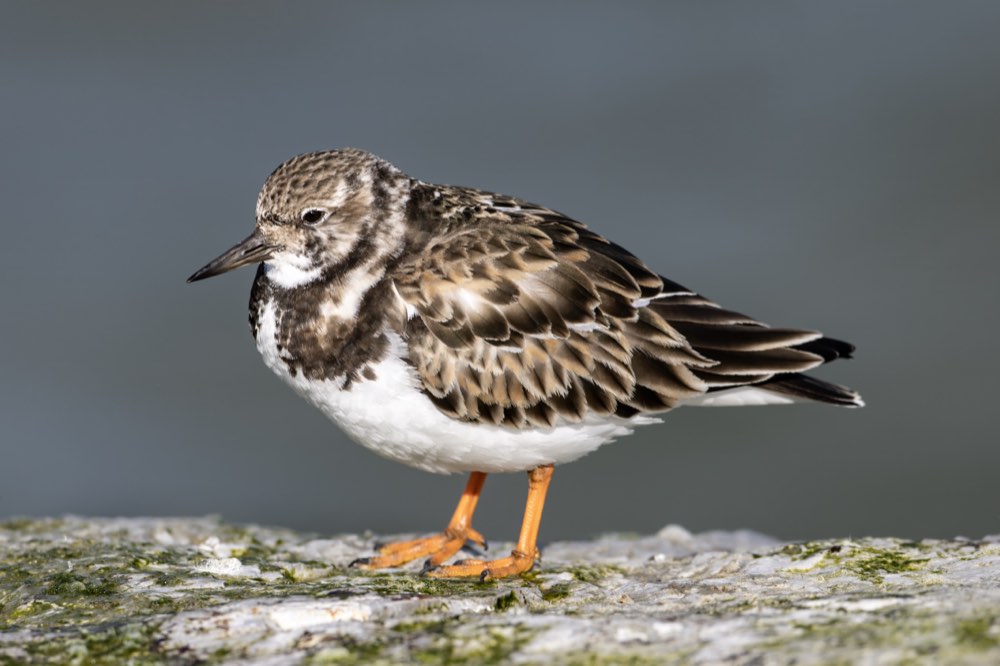
Bright rufous back, bold black-and-white face and chest pattern, white belly and stubby orange legs; duller brown in winter.
Female

Like the male but with a browner crown and a less crisp face pattern.
Male photo: Chuck Homler d/b/a Focus On Wildlife / Wikimedia, CC BY-SA 4.0 · Second photo: Chuck Homler d/b/a Focus On Wildlife / Wikimedia, CC BY-SA 4.0
Field marks
- Calico black, white and rust pattern
- Short orange legs
- Slightly upturned wedge-shaped black bill
- Bold white back stripes and wing bars in flight
Similar species
What it sounds like
A low, rattling, staccato chuckle, often given as a flock takes off.
Behaviour that gives it away
Flips over stones, shells and seaweed with its wedge-shaped bill to grab whatever is hiding underneath — the habit it is named for.
Habitat & range
Rocky shores, jetties, beaches and mudflats; Arctic tundra in summer.
When you'll see it
Depending on where in eastern, western and southeastern North America you are, it is a winter visitor and a passage migrant, seen mainly in spring and autumn.
What it eats
Invertebrates uncovered by turning stones and debris, plus insects and carrion.
Did you know?
Its stout upturned bill works like a crowbar, and it will overturn objects nearly its own weight to reach food.
Spot one yourself?
Point your camera at any bird and Aviarist identifies it in seconds — then logs it to your life list.
Get Aviarist on Google Play
More backyard birds
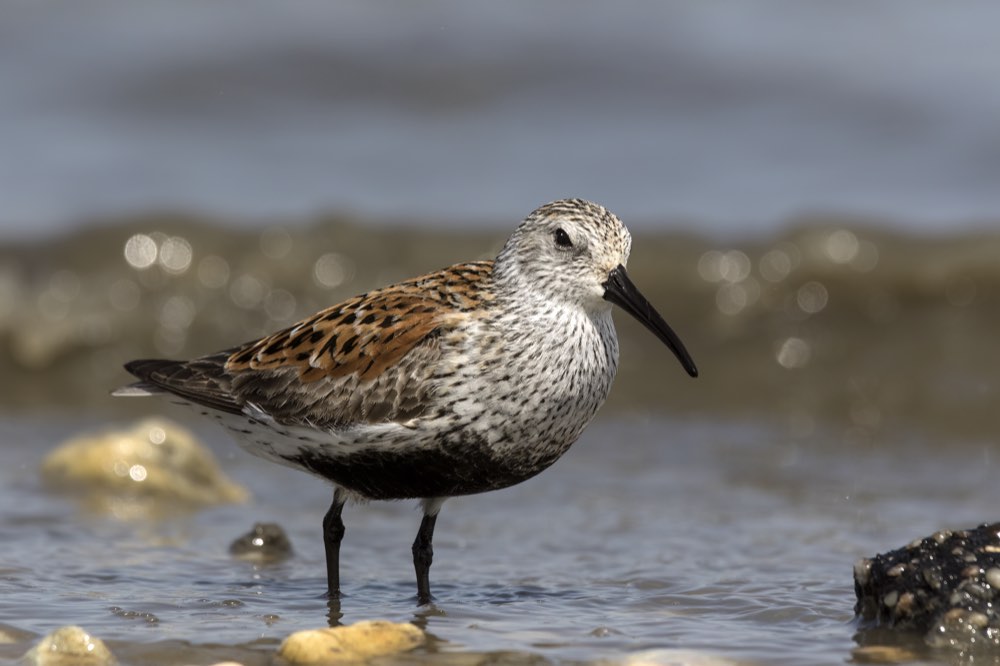
,_winter_plumage,_Barnegat_Inlet,_Ocean_County,_New_Jersey,_USA.jpg)
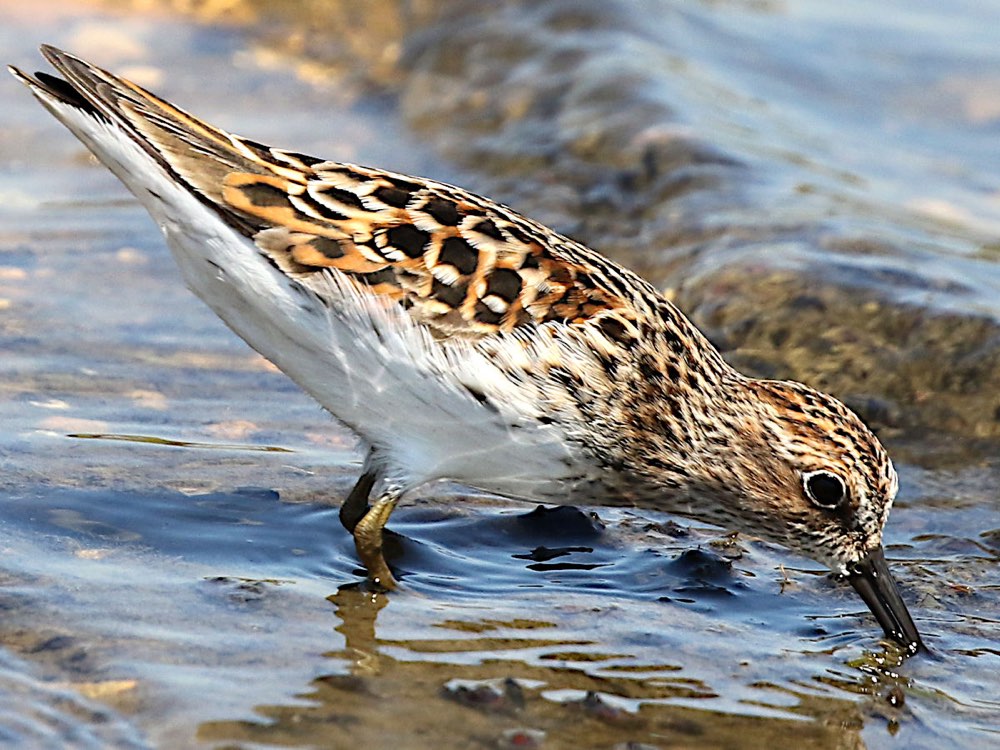
_Breeding_Plumage_Heislerville_WMA,_Cumberland_County,_New_Jersey,_USA.jpg)
Other apps we make