How to Identify aTownsend's Solitaire
Myadestes townsendi · 7.9–8.7 in (20–22 cm)
Male vs. female
Male
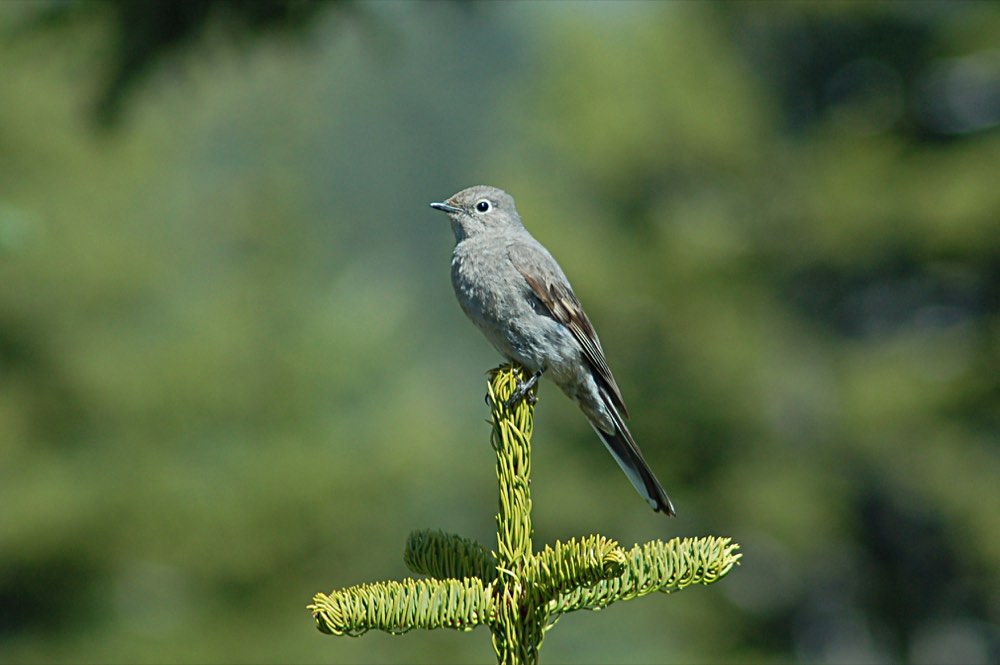
Uniform soft gray with a crisp white eye-ring, buffy patches in the wing and white outer tail feathers. Sexes look alike.
Female
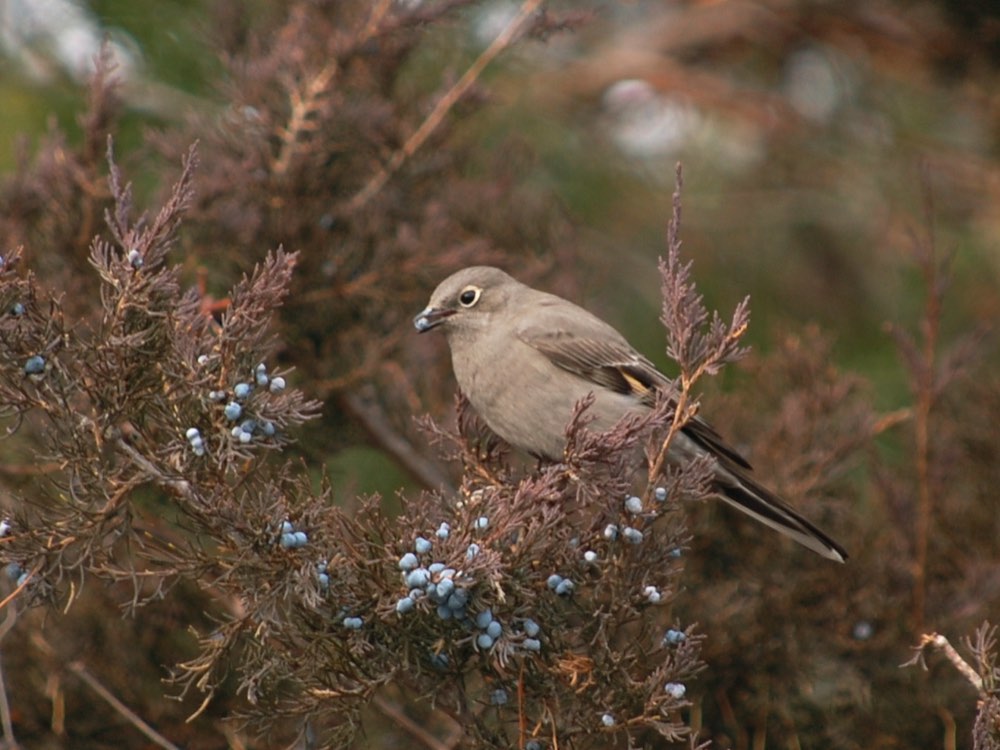
Identical to the male in the field.
Male photo: Don Henise / Wikimedia, CC BY 2.0 · Second photo: Jonathon Jongsma / Wikimedia, CC BY-SA 3.0
Field marks
- Bold white eye-ring on a plain gray face
- Buff wing patches visible in flight
- White outer tail feathers
- Long-tailed, upright, small-headed shape
Similar species
What it sounds like
A long, rich, rambling warble, and a single clear ringing "eek" note given all winter.
Behaviour that gives it away
Defends a winter feeding territory around a juniper crop, driving off all comers to keep the berries for itself.
Habitat & range
Mountain conifer forest in summer; juniper woodland and canyons in winter.
When you'll see it
Depending on where in western North America you are, it is present all year and a winter visitor.
What it eats
Insects in summer; almost entirely juniper berries in winter.
Did you know?
In winter it will defend a single juniper tree as a private larder, chasing off other birds all season to protect the berry crop.
Spot one yourself?
Point your camera at any bird and Aviarist identifies it in seconds — then logs it to your life list.
Get Aviarist on Google Play
More backyard birds


Other apps we make