How to Identify aTrumpeter Swan
Cygnus buccinator · 54.3–62.2 in (138–158 cm)
Male vs. female
Male
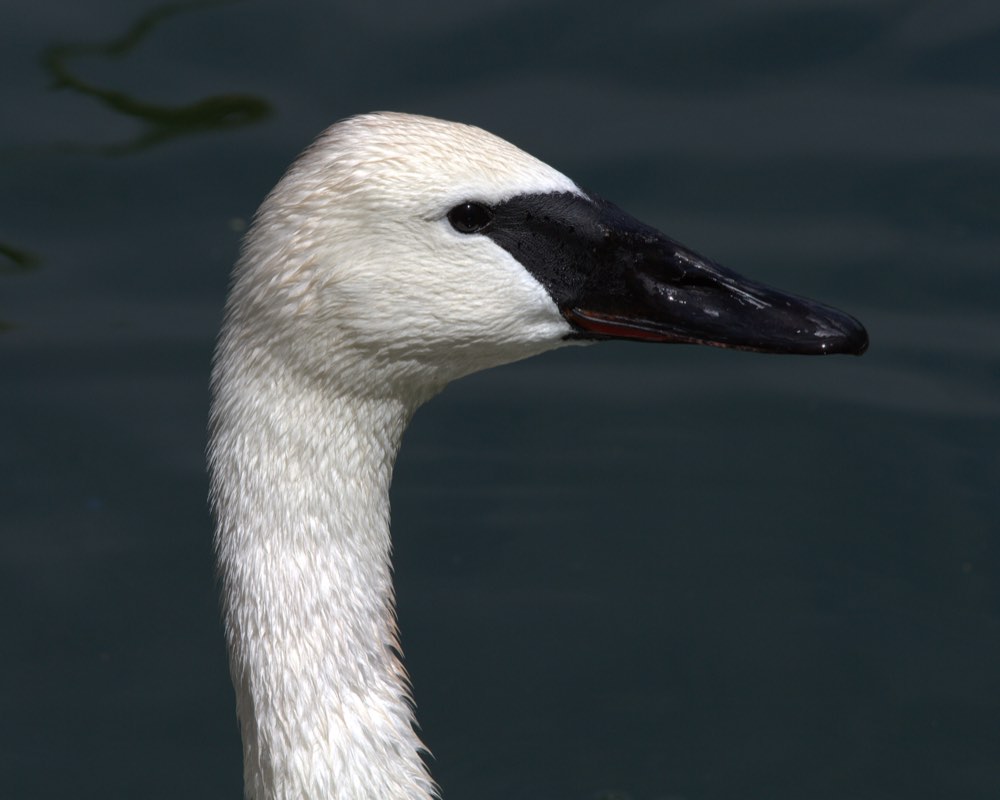
Entirely white with a massive black bill running in a straight line up to the eye, and no yellow spot. Sexes look alike.
Female
Identical to the male but smaller.
Male photo: Greg Hume / Wikimedia, CC BY-SA 4.0
Field marks
- Very large — the biggest native waterfowl on the continent
- All-black bill with a straight profile into the forehead
- Black facial skin forming a broad wedge to the eye
- Neck held with a slight kink at the base
Similar species
What it sounds like
A deep, resonant, trumpeting call, lower and more brassy than a Tundra Swan’s.
Behaviour that gives it away
Its windpipe coils inside the breastbone like a French horn, which is what gives the call its trumpeting resonance.
Habitat & range
Shallow lakes, marshes and slow rivers in the Northwest, Rockies and upper Midwest.
When you'll see it
Depending on where in northern, western and central North America you are, it is present all year and a winter visitor.
What it eats
Aquatic plants, tubers and grasses.
Did you know?
Hunted to near extinction for its skin and feathers, fewer than a hundred were known in the United States by the 1930s; it has since recovered to thousands.
Spot one yourself?
Point your camera at any bird and Aviarist identifies it in seconds — then logs it to your life list.
Get Aviarist on Google Play
More backyard birds

Other apps we make