How to Identify aBlack-bellied Plover
Pluvialis squatarola · 10.6–11.8 in (27–30 cm)
Male vs. female
Male
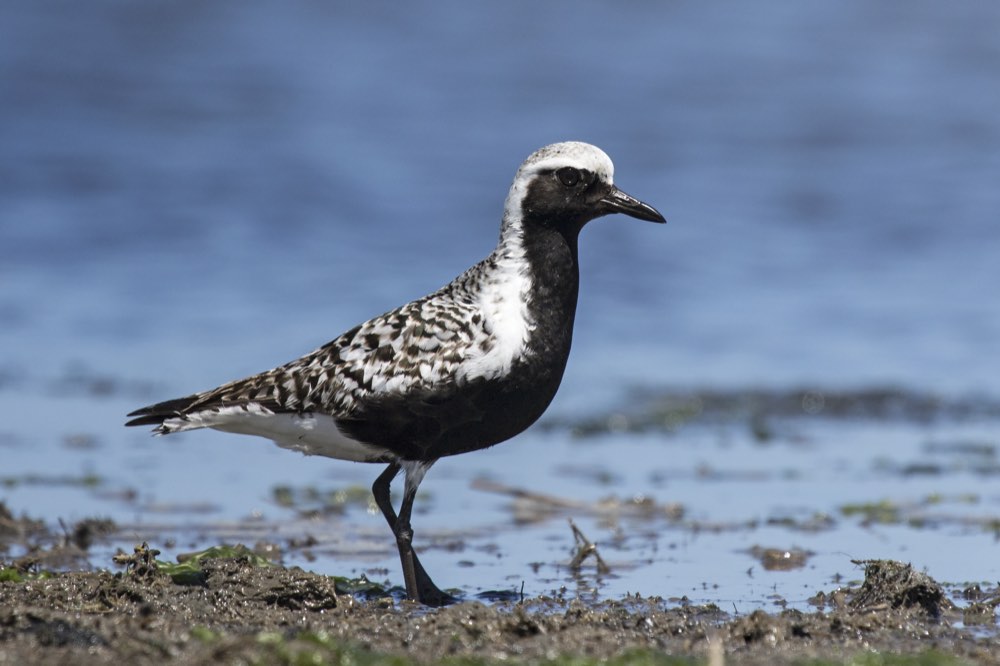
Breeding birds have a jet-black face, throat and belly framed in white, with a checkered silver-and-black back; plain gray in winter.
Female
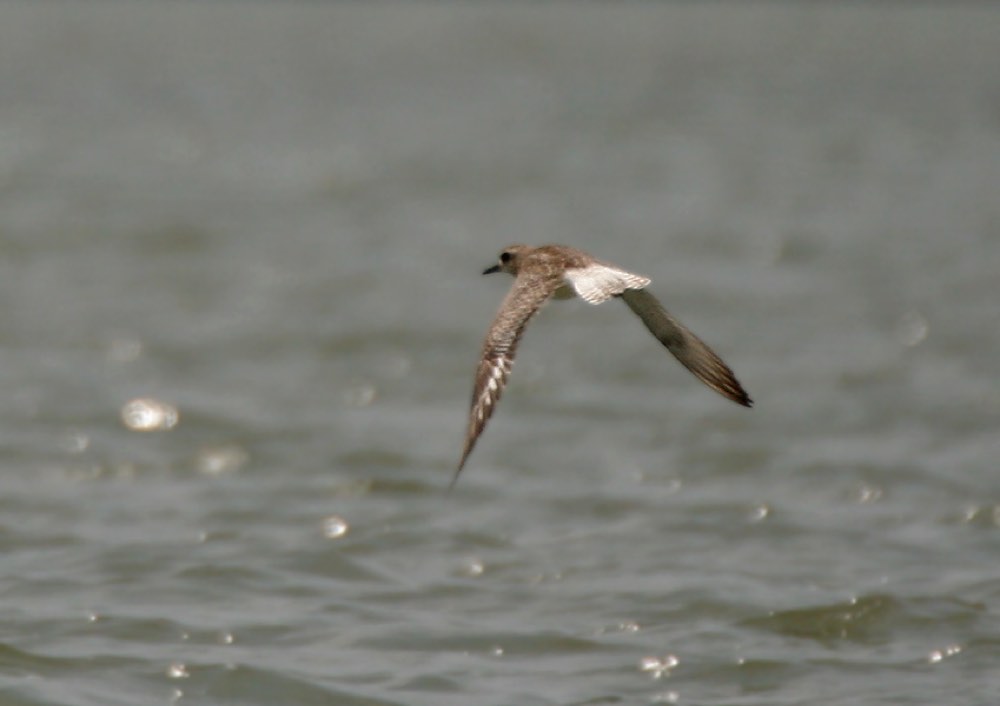
Like the male but the black underparts are mottled and less solid.
Male photo: Chuck Homler, Focus On Wildlife / Wikimedia, CC BY-SA 4.0 · Second photo: J.M.Garg / Wikimedia, CC BY-SA 4.0
Field marks
- Black patch under the wing at the base, unique among plovers
- Heavy, thick, short black bill
- White rump and tail in flight
- Large-headed, thick-necked shape
Similar species
What it sounds like
A plaintive, drawn-out, three-note whistle — "pee-oo-ee" — carrying across open flats.
Behaviour that gives it away
Wary and quick to call, so it often flushes a whole flat of shorebirds before anything else has noticed you.
Habitat & range
Beaches, mudflats and estuaries in winter; high Arctic tundra in summer.
When you'll see it
Depending on where in eastern, western and southeastern North America you are, it is a winter visitor and a passage migrant, seen mainly in spring and autumn.
What it eats
Marine worms, molluscs, crustaceans and insects.
Did you know?
Its black "wingpits" are diagnostic in flight, and are the quickest way to separate it from the golden-plovers.
Spot one yourself?
Point your camera at any bird and Aviarist identifies it in seconds — then logs it to your life list.
Get Aviarist on Google Play
More backyard birds
_Great_Bay_Wildlife_Management_Area,_New_Jersey,_USA.png)
_W_IMG_6950.jpg)
Other apps we make