How to Identify aBridled Titmouse
Baeolophus wollweberi · 4.7–5.3 in (12–13.5 cm)
Male vs. female
Male
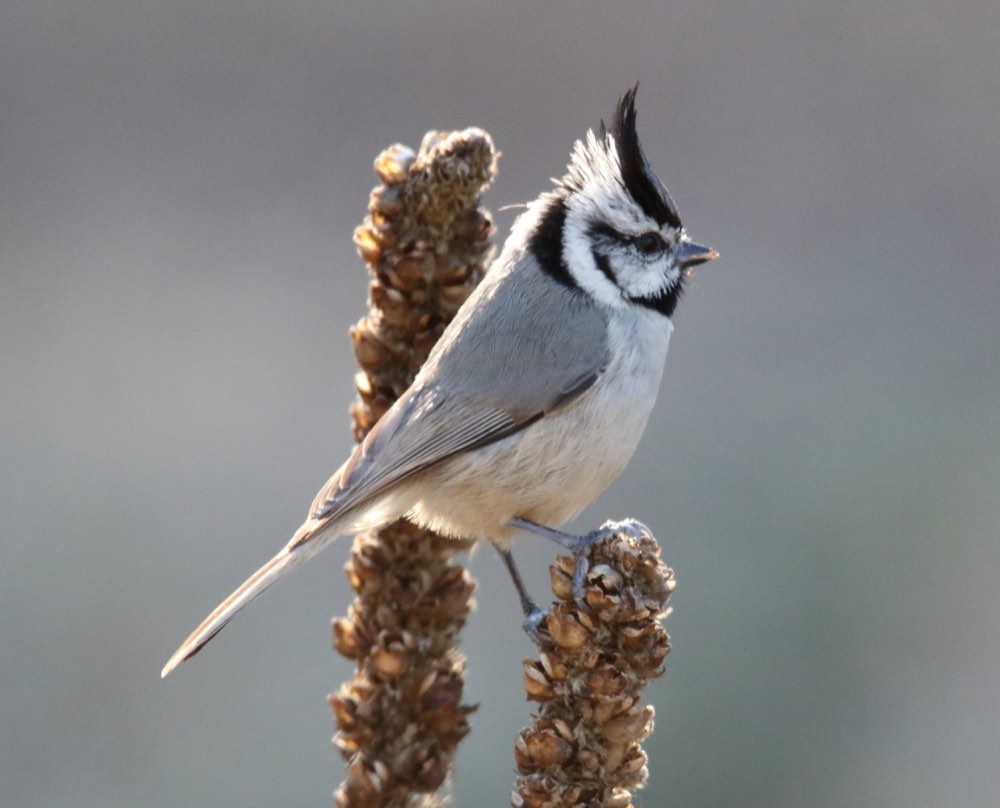
Gray body with a pointed crest and a bold black-and-white facial bridle — a black eye-line, cheek border and throat patch. Sexes look alike.
Female
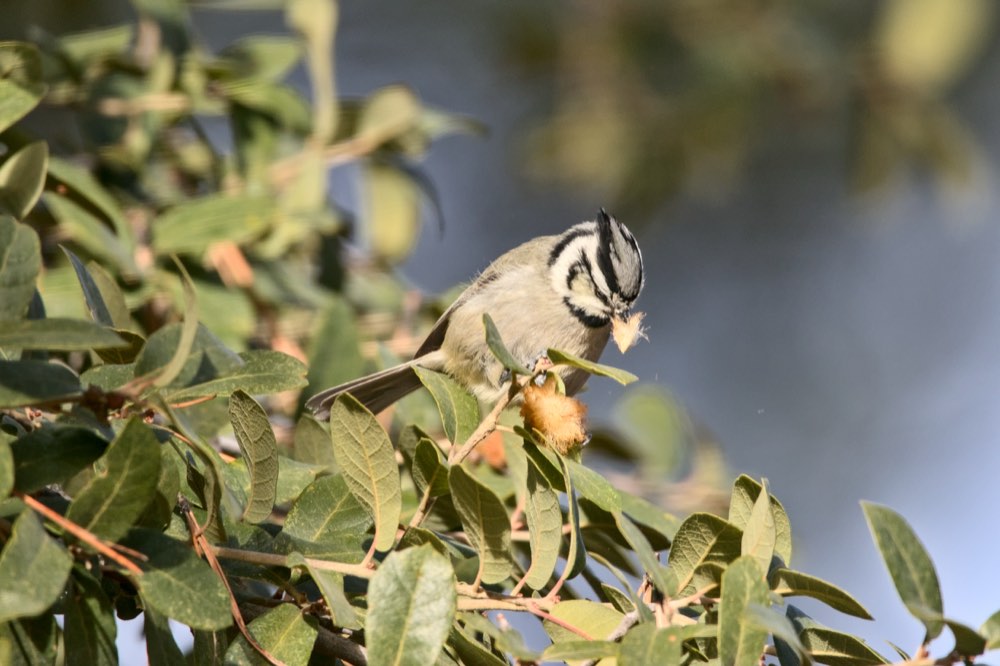
Identical to the male in the field.
Male photo: Dominic Sherony / Wikimedia, CC BY-SA 2.0 · Second photo: Hunter Trick (TrickHunter) / Wikimedia, CC BY-SA 4.0
Field marks
- Black-and-white face pattern like a bridle
- Pointed gray crest edged black
- Black bib on the throat
- Small size and restricted southwestern range
Similar species
What it sounds like
A fast, high, rolling chatter, and a repeated two-note whistle.
Behaviour that gives it away
Travels in noisy family flocks through oak canyons, often leading mixed groups of warblers and nuthatches.
Habitat & range
Oak and pine-oak canyons of southeastern Arizona and southwestern New Mexico.
When you'll see it
Present all year in southwestern North America.
What it eats
Insects, spiders, acorns and seeds.
Did you know?
Its range in the United States is tiny — a handful of southeastern Arizona and New Mexico canyons — making it a target bird for visiting birders.
Spot one yourself?
Point your camera at any bird and Aviarist identifies it in seconds — then logs it to your life list.
Get Aviarist on Google Play
More backyard birds
_(16875140301).jpg)

Other apps we make