How to Identify aJuniper Titmouse
Baeolophus ridgwayi · 5.3 in (13.5 cm)
Male vs. female
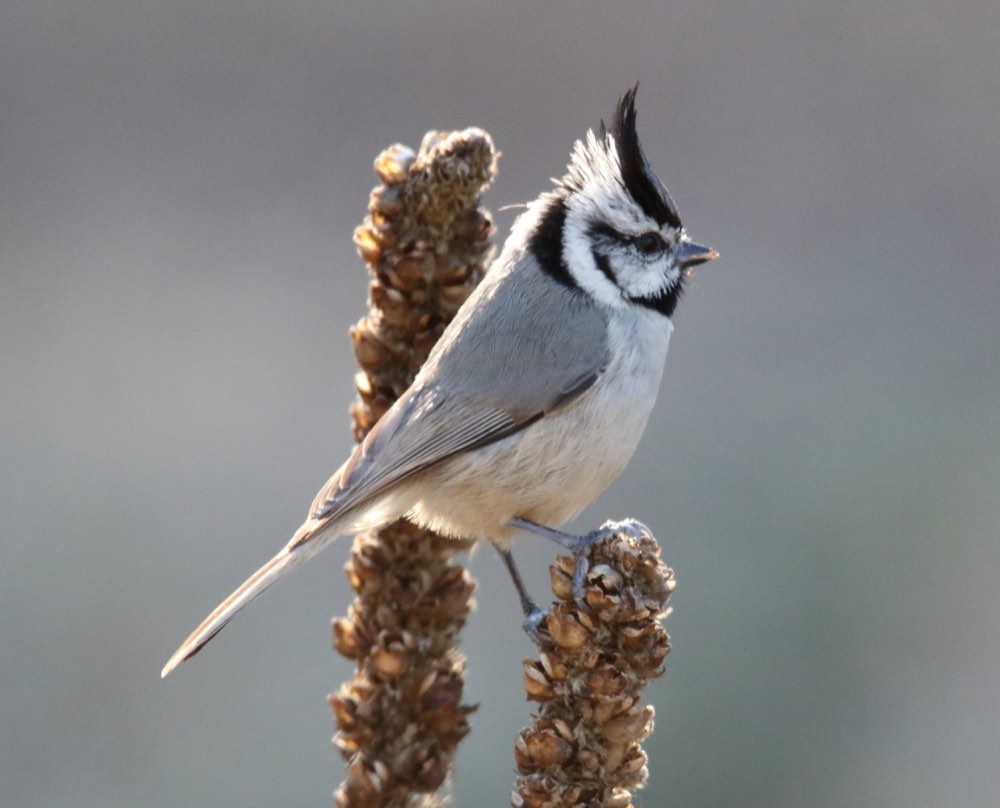
Male
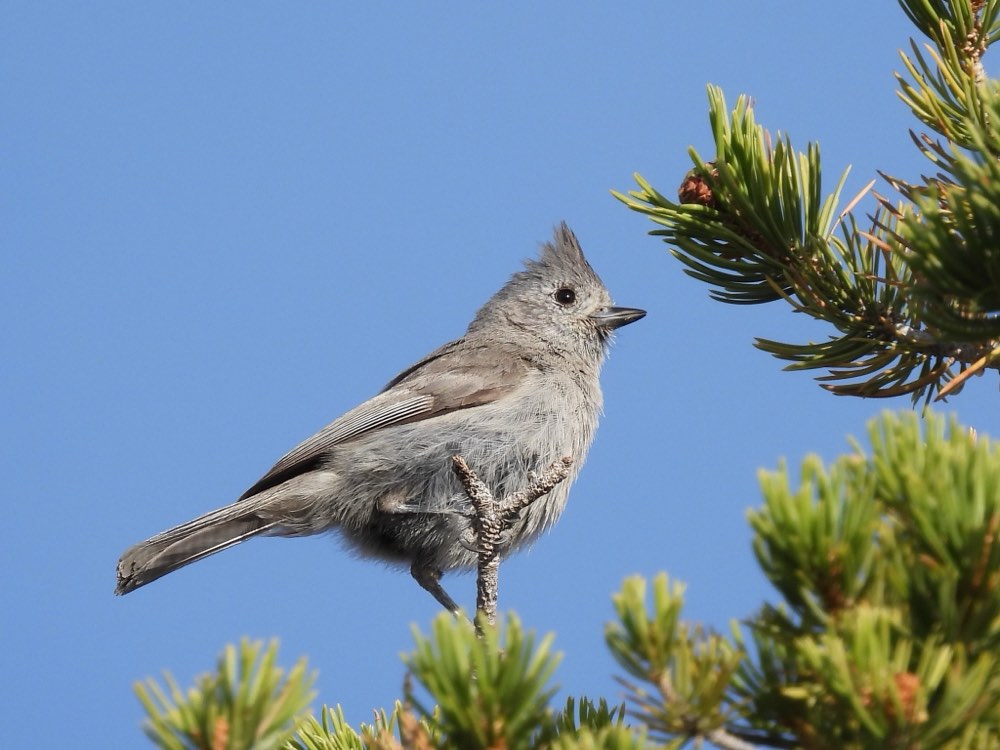
Uniform ash-gray with a short pointed crest and a plain face. Sexes look alike.
Female
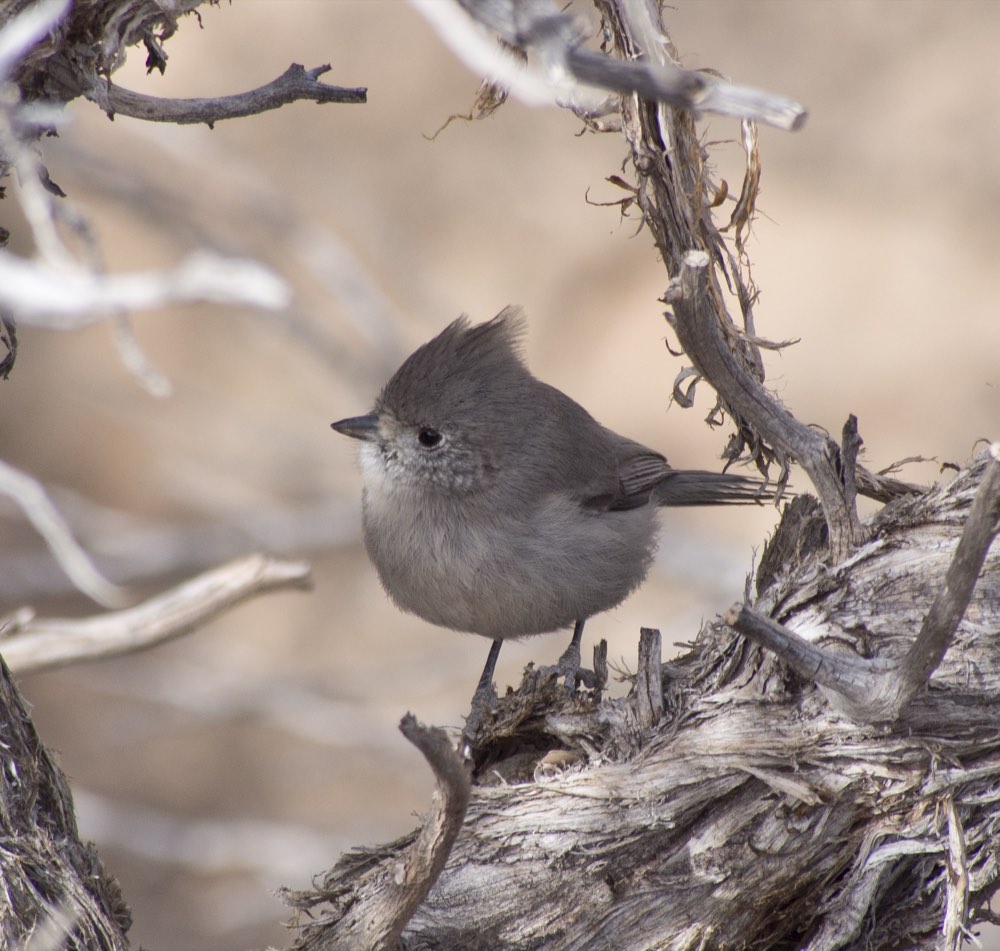
Identical to the male in the field.
Male photo: P Holroyd / Wikimedia, CC BY 4.0 · Second photo: Robb Hannawacker / Wikimedia, CC0
Field marks
- Entirely plain gray with no wingbars or face pattern
- Short pointed crest
- Stubby dark bill
- Restricted to pinyon-juniper woodland
Similar species
What it sounds like
A rapid, dry, rolling series of "chi-chi-chi-chi" notes, faster and harsher than an Oak Titmouse.
Behaviour that gives it away
Pairs hold a territory year-round and stay together for life, defending the same juniper stand season after season.
Habitat & range
Pinyon-juniper woodland of the Great Basin and Southwest.
When you'll see it
Present all year in western and southwestern North America.
What it eats
Insects, juniper berries, pinyon nuts and seeds.
Did you know?
It was split from the Oak Titmouse in 1996; the two look nearly identical but sound different and never meet.
Spot one yourself?
Point your camera at any bird and Aviarist identifies it in seconds — then logs it to your life list.
Get Aviarist on Google Play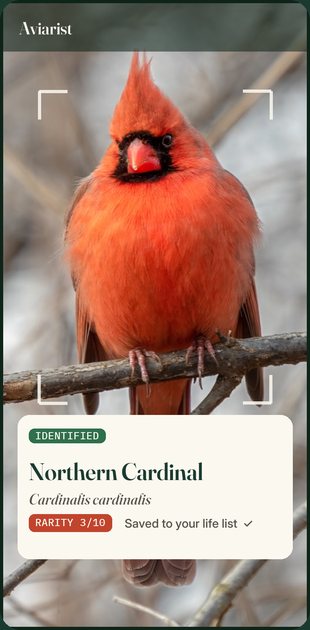
More backyard birds


Other apps we make