How to Identify aCanyon Wren
Catherpes mexicanus · 4.5–6.1 in (11.5–15.5 cm)
Male vs. female
Male
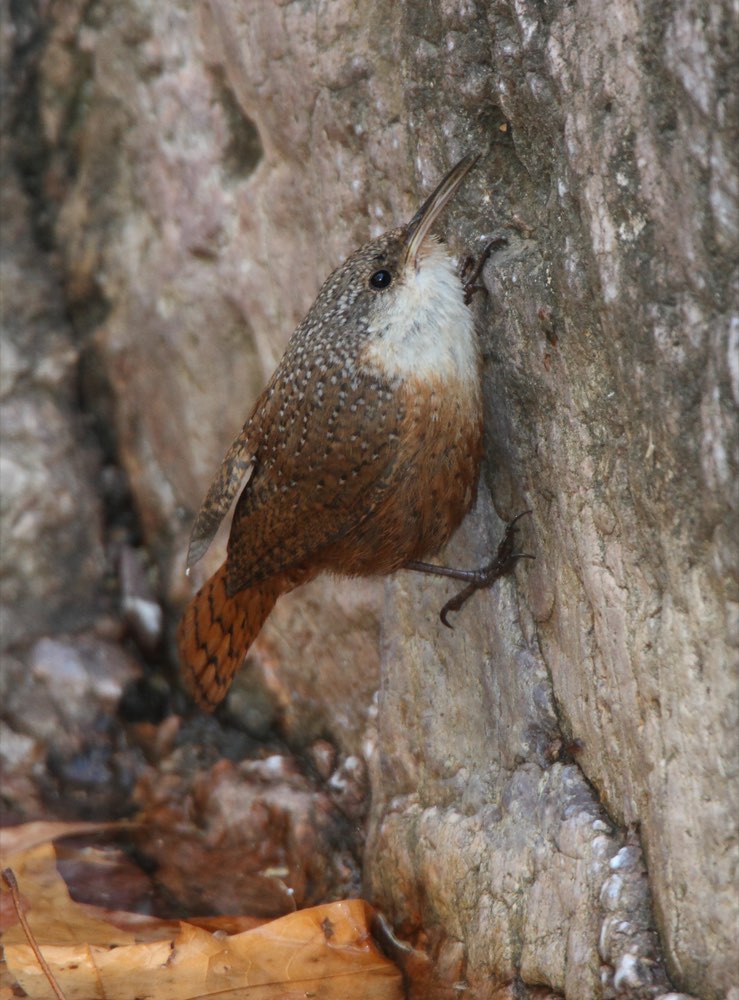
Deep rufous body finely speckled white and black, with a brilliant clean white throat and upper chest. Sexes look alike.
Female
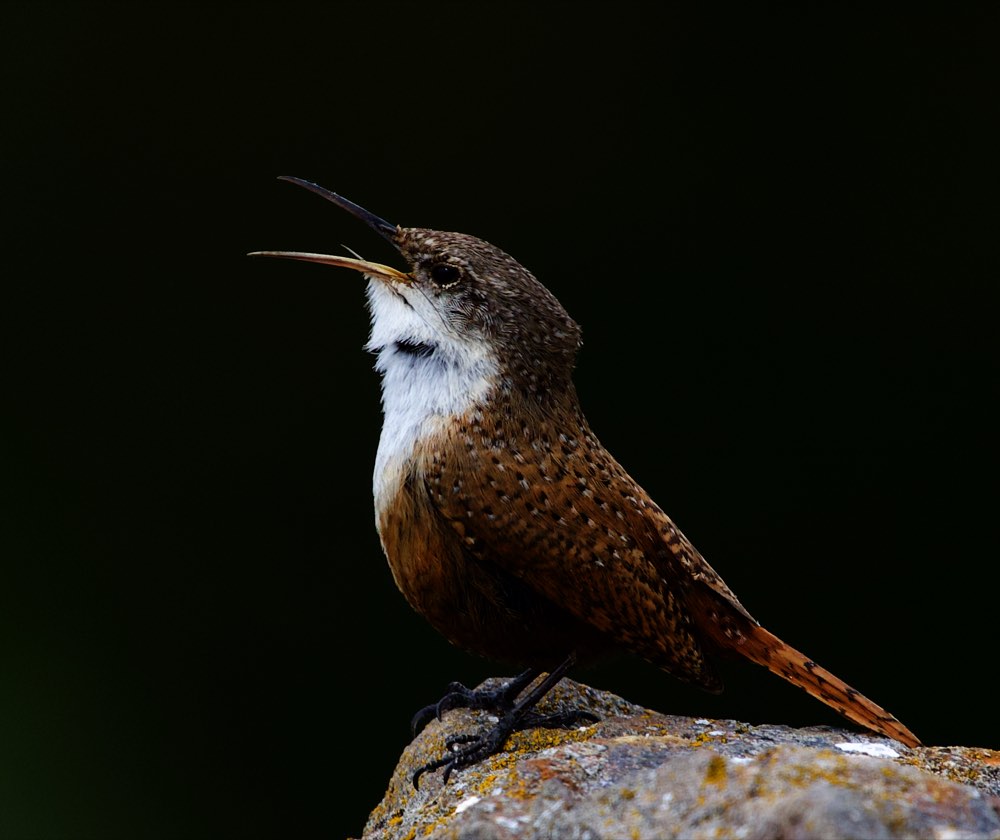
Identical to the male in the field.
Male photo: Gary L. Clark / Wikimedia, CC BY-SA 4.0 · Second photo: Basar / Wikimedia, CC BY-SA 4.0
Field marks
- Snow-white throat and chest against a rusty body
- Very long, thin, slightly downcurved bill
- Flattened head and skull for entering narrow cracks
- Rich chestnut rump and tail
Similar species
What it sounds like
A cascading series of clear whistles falling down the scale and slowing at the end — one of the most beautiful sounds of the desert.
Behaviour that gives it away
Its skull is flattened and the vertebrae are modified so it can squeeze into rock cracks far too narrow for its body depth.
Habitat & range
Cliffs, canyons, rock outcrops and stone buildings across the West.
When you'll see it
Present all year in western and southwestern North America.
What it eats
Insects and spiders extracted from deep rock crevices.
Did you know?
Its skull is flattened top to bottom, an adaptation that lets it push into cracks other birds cannot enter.


Spot one yourself?
Point your camera at any bird and Aviarist identifies it in seconds — then logs it to your life list.
Get Aviarist on Google Play


More backyard birds





Other apps we make