How to Identify aSedge Wren
Cistothorus stellaris · 3.9–4.7 in (10–12 cm)
Male vs. female
Male
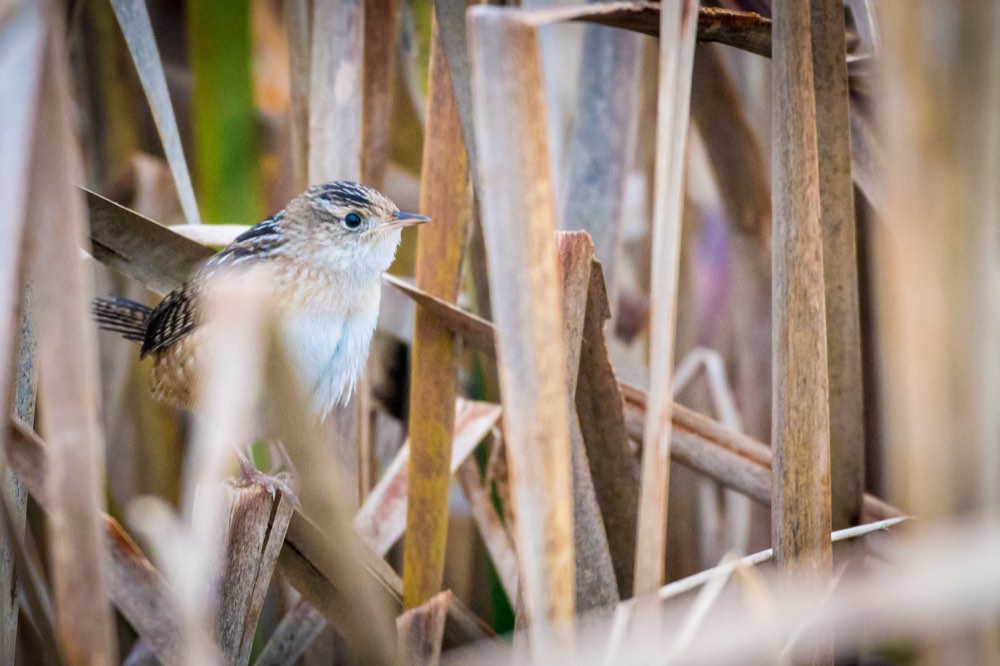
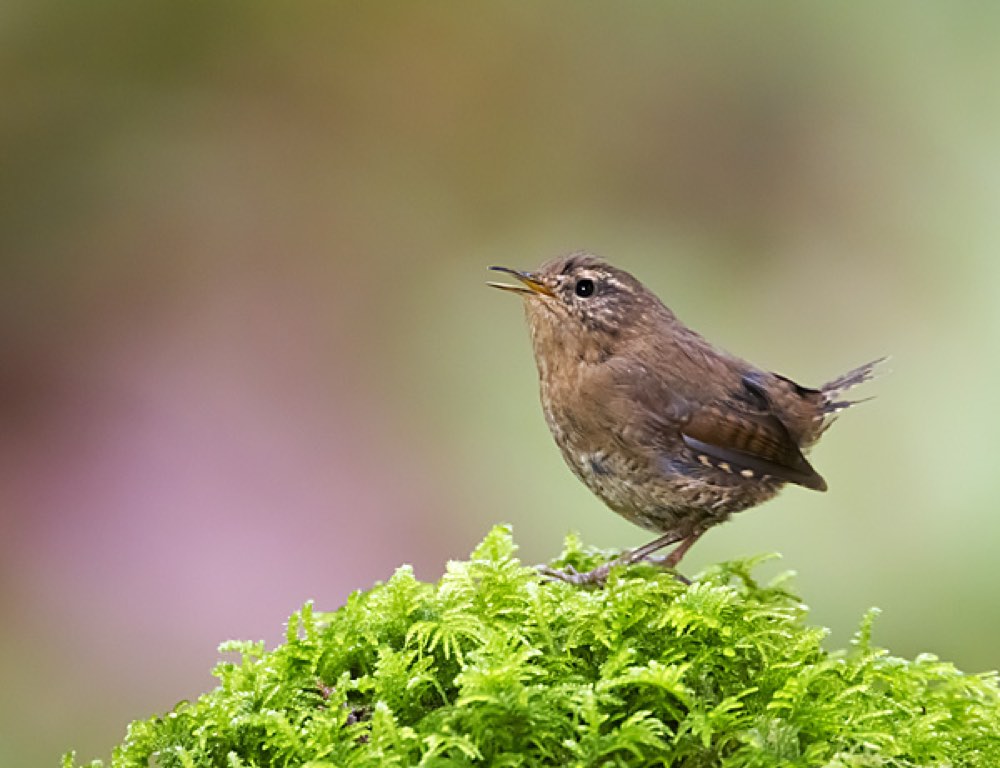
Buff-brown with a streaked crown and back, a faint pale eyebrow, and barred wings and tail. Sexes look alike.
Female
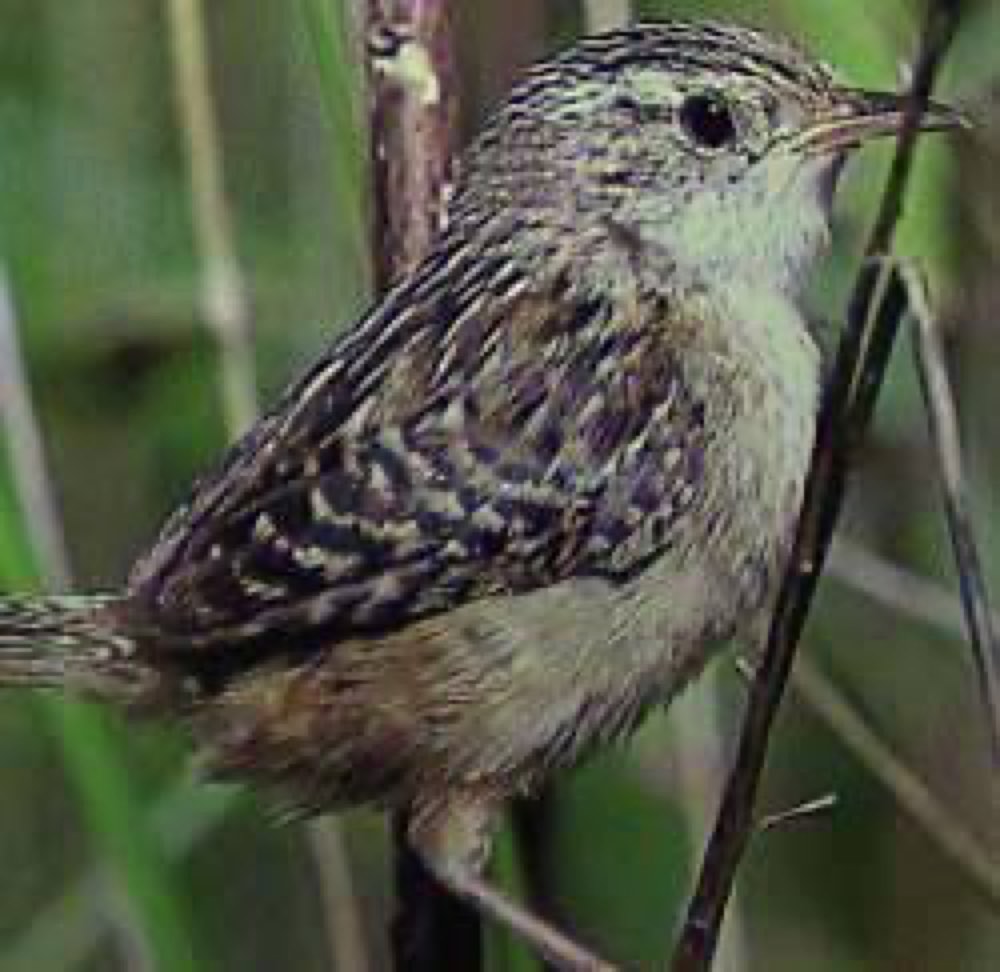
Identical to the male in the field.
Male photo: Andrew C / Wikimedia, CC BY 2.0 · Second photo: US NPS, , cleaned up with Picasa by Big iron. / Wikimedia, Public domain
Field marks
- Streaked crown, not plain
- Faint, indistinct eyebrow — not the bold stripe of a Marsh Wren
- Buffy underparts with barred flanks
- Short tail often cocked
Similar species
What it sounds like
A dry, staccato series beginning with two or three sharp chips then running into a flat rattle.
Behaviour that gives it away
Nomadic and unpredictable — it may nest in a meadow one year and be entirely absent the next, shifting with water levels.
Habitat & range
Wet sedge meadows and grassy marsh margins rather than deep cattails.
When you'll see it
Depending on where in central, eastern and northern North America you are, it is a summer visitor that arrives to breed and a passage migrant, seen mainly in spring and autumn.
What it eats
Insects and spiders taken low in dense grass.
Did you know?
It is one of the least predictable breeding birds in North America, abandoning and recolonising whole meadows from year to year.
Spot one yourself?
Point your camera at any bird and Aviarist identifies it in seconds — then logs it to your life list.
Get Aviarist on Google Play
More backyard birds
_(22276100980).jpg)

Other apps we make